Close More Deals: Open vs Closed Questions and Drills for Sales Reps
Close More Deals: Open vs Closed Questions and Drills for Sales Reps

Use open questions to get a prospect talking and closed questions to get them committing. Open questions surface motive, context, and pain; closed questions confirm facts and force a decision. The strongest reps rarely pick one over the other. They run a one-two punch: ask a closed question to pin down a fact, then follow with an open question to learn why it matters, or open the conversation wide and narrow it with a closed question once they’ve heard enough.
TL;DR:
- Asking a closed question first confirms a fact quickly but may cut off in-depth insights, so follow with an open question to explore motives.
- Use a cycle of a closed question followed by an open question to gather data and understand the prospect’s true needs during discovery and qualification.
- Coaches should focus on improving reps’ follow-up questions by reviewing transcripts, giving quick feedback, and emphasizing confirmation of open answers with closed questions.
- Reps tend to rush or ask leading questions when anxious; building confidence to sit quietly after an open question improves listening and information gathering.
- Regular practice with AI roleplays that include real prospect pushback helps reps develop the discipline to ask better questions under pressure.
Table of Contents
- Open vs. Closed Questions in Sales: The Core Definitions
- Open vs. Closed: Strengths, Limits, and Tradeoffs
- Timing and Tactics: When to Use Each and How to Transition
- A Question Bank by Stage: Discovery, Qualifying, Objections, Closing
- Coaching Reps to Ask Better Questions
- Common Mistakes With Sales Questions (and Quick Fixes)
- Quick Scripts You Can Use on Your Next Call
- What I’ve Learned Coaching Reps on This
- Turn These Techniques Into Muscle Memory
- Sources
Open vs. Closed Questions in Sales: The Core Definitions
An open question invites elaboration. “What’s driving the urgency on this?” hands the prospect the floor and lets them shape the answer. A closed question narrows the field to a fact, a number, or a yes/no. “Is Q3 still the target?” gets you one of two answers and nothing more.
That difference changes who controls the conversation. Closed questions keep the rep in the driver’s seat, which is useful for pace but risky if you drive past something important. Open questions hand control to the buyer, which slows things down but invites exploration you’d otherwise miss entirely. The tradeoff shows up in the data too. Top performers tend to listen roughly 57% of the time in a conversation, against 43% talking, according to The Sales Blog’s breakdown of question types in B2B sales. Open questions are what create that listening space.
- Open: starts with “what,” “how,” “why,” or “tell me about.”
- Closed: starts with “is,” “do,” “did,” “will,” or “can.”
- Effect of open: lowers guardedness, raises talk time for the buyer, surfaces unscripted detail.
- Effect of closed: lowers cognitive load, speeds pace, risks shutting down elaboration too early.
Open vs. Closed: Strengths, Limits, and Tradeoffs
Open questions win on insight. They’re how you find the real budget owner, the political tension inside a buying committee, or the actual reason a deal stalled last quarter. The cost is time, and an open question asked without focus turns into a rambling monologue that goes nowhere useful.
Closed questions win on speed and certainty. They confirm a timeline, lock a next step, or rule a prospect out fast when they’re not a fit. The cost is depth. Stack too many closed questions in a row and the call starts to feel like an interrogation, which makes buyers guarded instead of candid.
A clean way to decide: open to learn, narrow to move. That’s the rule Rethink Revenue lands on, and it holds up call after call.
- Early discovery, unclear pain: lean open.
- Confirming budget, timeline, or authority: lean closed.
- Prospect rambling off-topic: use a closed question to redirect.
- Prospect giving one-word answers: use an open question to unlock detail.
Timing and Tactics: When to Use Each and How to Transition
Timing depends on how much trust you’ve earned. On a cold outbound call, opening with a big open question (“What’s your biggest challenge with X?”) often falls flat, because the prospect hasn’t decided you’re worth the effort of a real answer. Patrick Trümpi’s research on timing makes the case plainly: earn the right to ask open questions first, usually with a short closed question or a specific value statement, before you ask someone to open up.
On inbound calls, where the prospect already raised a hand, you can move to open questions faster because they’ve self-selected into the conversation.
The transition that works best in either setting is the one-two punch: a closed question to get a fact, then an open follow-up to get the story behind it. “Are you currently using a competitor tool?” (closed) followed by “What’s not working with it?” (open) gets you both the data point and the motive in under fifteen seconds.
- Ask a closed question to establish a fact.
- Follow immediately with an open “why” or “how” tied to that fact.
- Let the answer run, then narrow again with a closed question to confirm what you heard.
- Repeat the cycle until you have enough to move to next steps.
Pro Tip: If a prospect answers your open question in one sentence, don’t pile on another open question. Ask a closed one instead. Short answers usually mean they’ve told you what they’re willing to share for now.
A Question Bank by Stage: Discovery, Qualifying, Objections, Closing
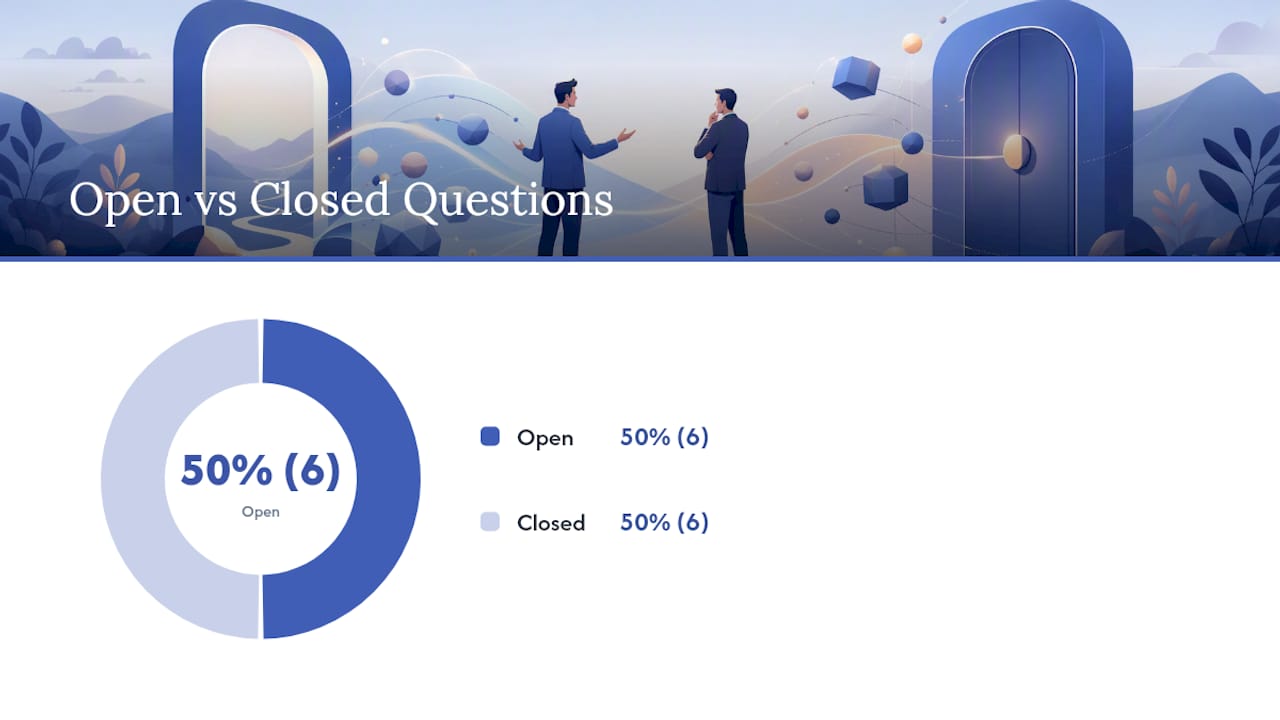
Reps rarely need more questions. They need the right question at the right moment. Below is a working set organized by stage, with the open and closed version paired so you can run the one-two punch on the spot.
Rapport and discovery
- Open: “Walk me through how your team handles this today.” (Use early. Surfaces process and unspoken pain.)
- Closed: “Is this something you’re actively trying to fix this quarter?” (Use as a follow-up to gauge urgency.)
- Open: “What made you take this call?” (Use in the first two minutes to find real motive.)
Qualification
- Closed: “Do you have budget allocated for this already?” (Use once pain is confirmed.)
- Open: “How does your team usually make a decision like this?” (Use to map the buying process.)
- Closed: “Are you the final decision maker, or is someone else involved?” (Use before proposing a next step.)
Objection handling
- Open: “What’s behind that concern?” (Use immediately after any objection, before defending your product.)
- Closed: “If we solved that specific issue, would this move forward?” (Use to test whether the objection is real or a smokescreen.)
- Open: “What would need to be true for this to be a clear yes?” (Use when a prospect stalls without naming a reason.)
Closing
- Closed: “Does next Thursday work for a follow-up with your team?” (Use once value is agreed on.)
- Open: “What questions do your stakeholders still need answered?” (Use before finalizing, to surface late-stage risk.)
- Closed: “Are we good to move forward on this?” (Use only after every open question has been answered.)
This list draws on the same stage structure SPOTIO uses in its open-ended question library, adapted here with the closed counterpart every open question needs.
Coaching Reps to Ask Better Questions
Question skill improves with reps, not lectures. A few drills consistently move the needle:
- One-behavior reruns: replay the same five-minute call segment, changing only the question type, and compare how the prospect’s energy shifts.
- Timed open-question drills: give a rep 60 seconds to ask one open question and let the answer run without interrupting. Most reps cut buyers off far earlier than they think.
- Five-call retrospectives: review five recent call transcripts and mark every question as open or closed, then check the ratio against the stage it happened in.
A useful micro-drill: run five short calls where the rep must open with exactly one open question and close with exactly one closed confirmation, then score listening prompts and pivot timing against a rubric built from real call scenarios.
Feedback has to be fast and specific to stick. Reviewing a transcript line by line, flagging where an open question got cut short or a closed question came too early, teaches more in ten minutes than a week of general coaching. This is exactly the gap AI-driven roleplay tools were built to close: repeatable scenarios, scored coaching reports, and transcripts a manager can review without sitting in on every call.
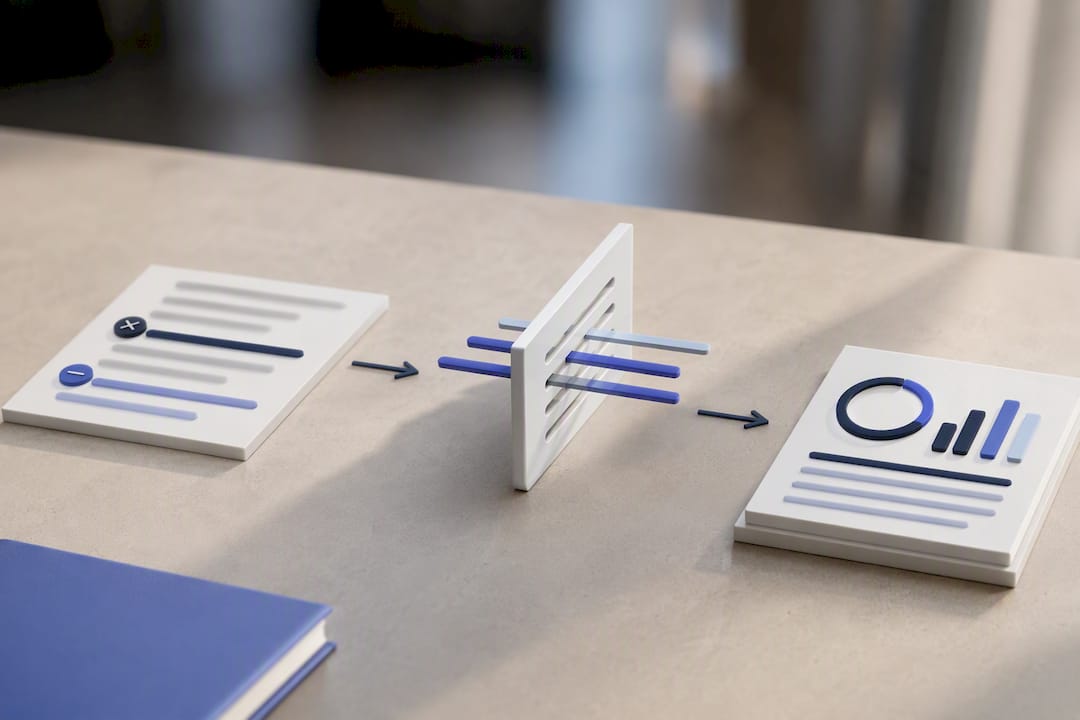
Pro Tip: Score reps on the follow-up, not just the initial question. Asking one strong open question means nothing if the rep doesn’t chase the answer with a sharper closed question two turns later.
Common Mistakes With Sales Questions (and Quick Fixes)
The most common error is treating open questions as a script to read down a list, instead of one sharp probe followed by real listening. A close second: phrasing closed questions as leading statements (“You’d want to save money, right?”) that push an answer instead of testing one.
- Mistake: stacking three open questions in a row. Fix: ask one, then confirm what you heard with a closed question before asking another.
- Mistake: leading closed questions that signal the “right” answer. Fix: rewrite as neutral yes/no phrasing.
- Mistake: never narrowing an open answer into a next step. Fix: end every open exchange with one closed confirmation.
A rep who asks “What’s holding this back?” and gets a rambling answer about internal politics, then follows with “So the real blocker is getting your CFO on board, correct?” has turned a vague answer into a workable next step in two sentences.
Quick Scripts You Can Use on Your Next Call
- Cold outreach opener: “Quick question. Is this still a priority for your team this quarter?” (closed, low effort)
- Discovery follow-up: “Got it. What’s making that hard to solve right now?” (open, right after a closed fact)
- Objection probe: “Understood. What’s really driving that concern?” (open, before defending anything)
- Pre-close check: “If we handle that, are we good to move forward?” (closed, tests real readiness)
- Next-step lock: “Does Thursday at 2 work for the follow-up?” (closed, specific and easy to answer)
What I’ve Learned Coaching Reps on This
The reps who struggle most with questioning aren’t lazy. They’re anxious, so they fill silence with more questions instead of letting one open question breathe. The fix isn’t a longer list. It’s confidence to sit quietly after asking something real, and the discipline to close the loop with a fact before moving on.
If there’s one habit worth building this week, it’s this: never let an open answer go unconfirmed. Ask it back as a closed question before you move to your next point.
— Adam
Turn These Techniques Into Muscle Memory
Reading a question bank is one thing. Using it under pressure, when a prospect pushes back or goes quiet, is another. That gap is exactly where most reps lose deals they should’ve won, and it’s the gap that repeated practice closes fastest.
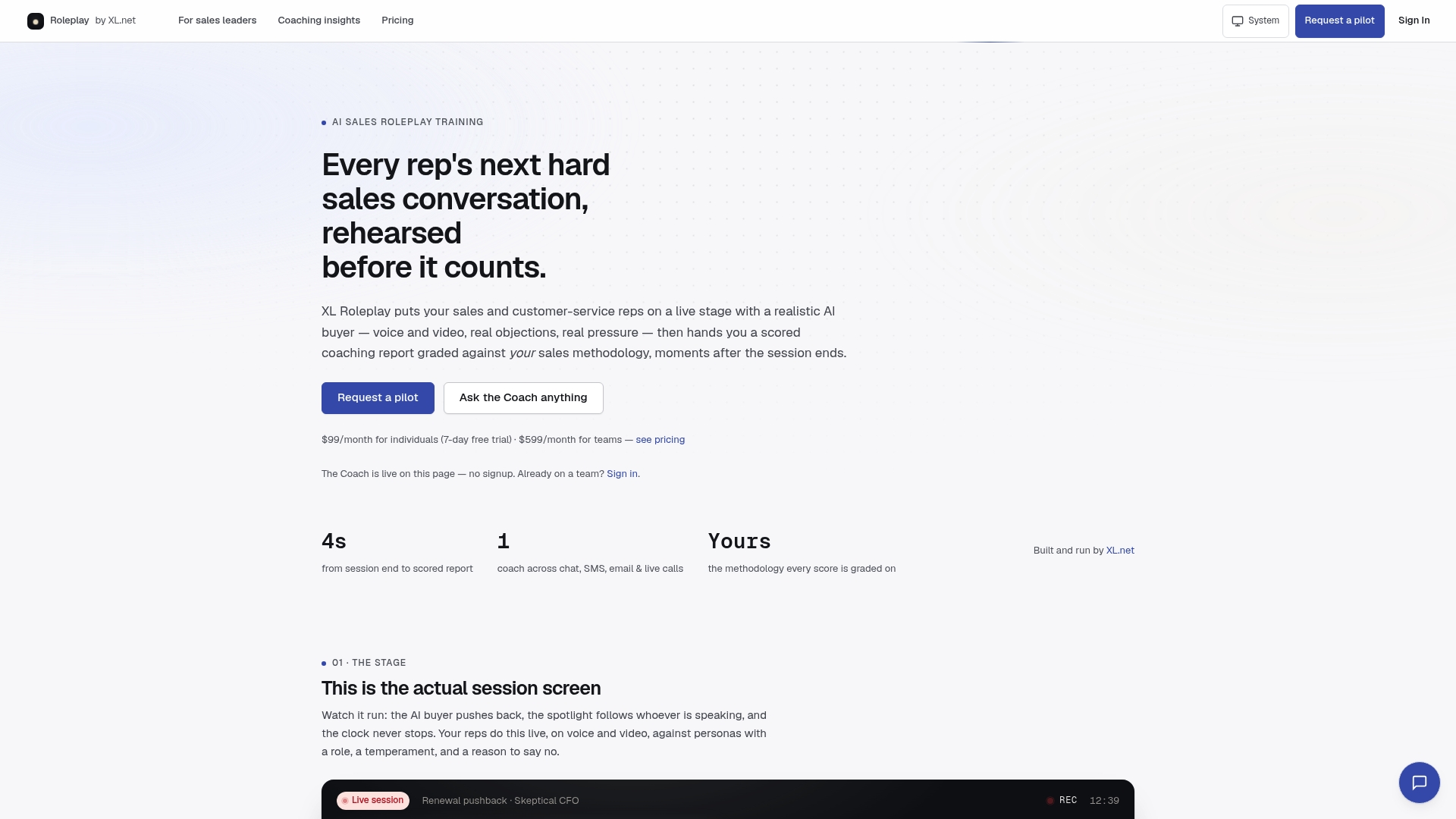
Reps can run these exact drills against realistic AI buyers who push back, stall, and object the way real prospects do. Every session can generate a scored coaching report and a full transcript, so a manager can see where a rep opened too early, closed too late, or never confirmed an answer at all. That’s a faster feedback loop than sitting in on live calls and hoping to catch the same pattern twice.
Sales leaders who want their team running these drills on a regular cadence can start with the team plans built for sales leaders and get reps practicing this week instead of next quarter.
Sources
- The art of asking open-ended questions (HubSpot)
- The 6 types of questions you need in B2B sales (The Sales Blog)
- Closed-Ended vs Open-Ended Questions in Sales (Rethink Revenue)
- 55 Open-Ended Sales Questions to Close More Deals (SPOTIO)