Cut Ramp Time in 8–12 Weeks With Simulation Training for Sales Leaders
Cut Ramp Time in 8–12 Weeks With Simulation Training for Sales Leaders
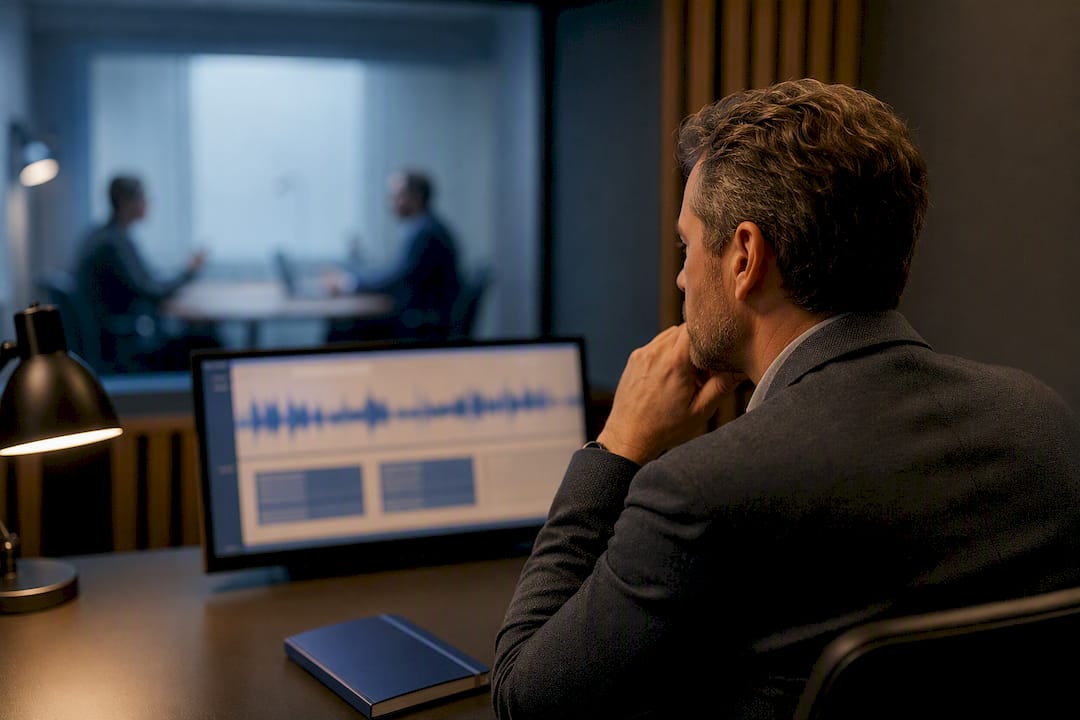
Simulation-based sales training puts reps into realistic, consequence-bearing conversations so they learn to act differently in real deals, faster than lecture-style coaching ever manages. It works best when the problem is behavioral, not informational: reps who know the pitch but freeze on objections, stall in discovery, or cave on price. Pick it when ramp time, win rate, or deal-stage accuracy are the metrics you actually need to move.
TL;DR:
- Simulation-based training is most effective for behavioral issues like objection handling, discovery stalls, or price caving, not informational gaps.
- Repetition with consistent scoring, immediate targeted feedback, and realistic stakes are crucial to achieving large skill gains.
- AI roleplay offers the best scalability, repeatability, and cost efficiency, especially for large teams needing volume practice.
- Design scenarios based on real deal data, focusing on stages where deals stall, with debriefs targeting a single behavior for faster improvement.
- A 8 to 12-week pilot with clear success metrics on readiness, ramp time, or win rate is needed to measure actual ROI.
Table of Contents
- What Is Simulation-Based Training for Sales, and What Does the Evidence Show?
- Live Actors, AI Roleplay, or VR: Which Format Fits Your Goal?
- How Do You Design Scenarios and Debriefs That Change Behavior?
- What Should You Measure to Prove ROI?
- How Do You Roll Out Simulation Training Without It Stalling?
- How XL Roleplay Puts This Research Into Practice
- A Sales Leader’s Quick Diagnostic Before You Commit
- Ready to Pilot Simulation-Based Training With XL Roleplay?
- Sources
- FAQ
What Is Simulation-Based Training for Sales, and What Does the Evidence Show?
A sales simulation is controlled, scenario-driven practice where a rep makes real decisions against a realistic buyer, and those decisions carry visible consequences: an objection gets handled or it doesn’t, a price gets held or it slips. Every choice gets recorded, scored, and reviewed. That record is what separates simulation from a scripted role-play exercise run by a manager on a Friday afternoon.
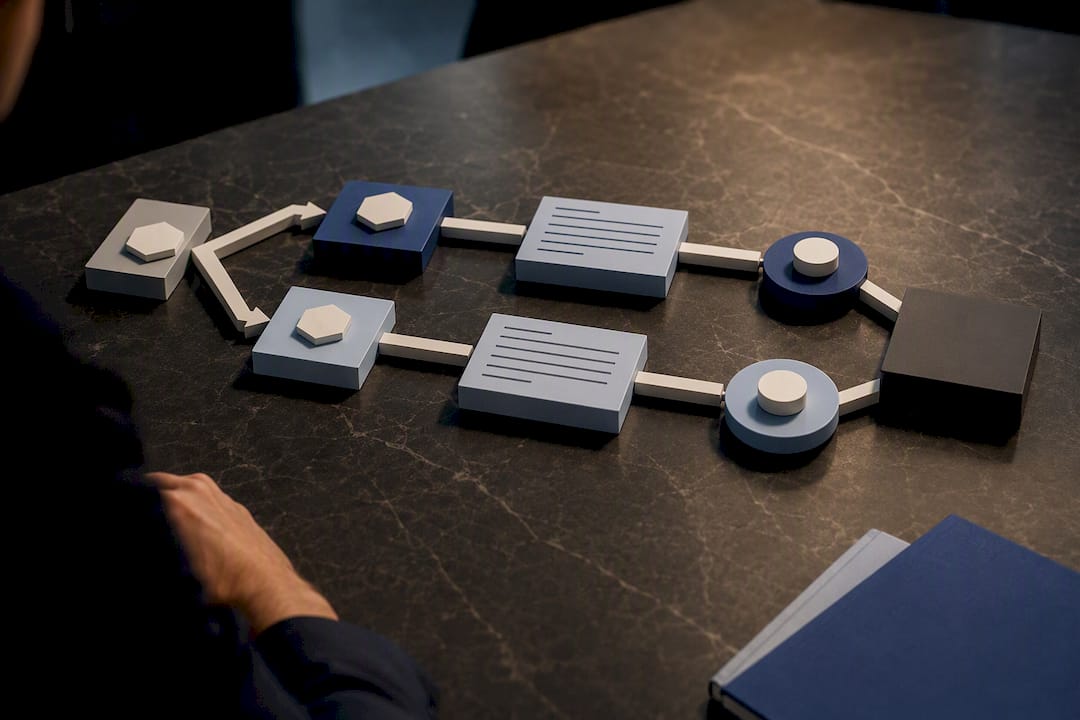
Traditional role-play depends entirely on the person playing the buyer. A generous manager lobs softball objections; a tough one buries the rep. Simulation removes that variability. A rep can face the same pricing objection ten times, in ten slightly different forms, and get scored the same way each time. Repetition with consistent scoring is what makes skill gains measurable instead of anecdotal.
The research backing this is not thin. A meta-analysis covering higher education found simulation-based learning produces a large positive effect on complex skill development, with an overall effect size of g = 0.85. That is a big number in learning science, on par with some of the most effective instructional interventions ever studied.
The core finding: Simulation-based learning shows a large effect (g = 0.85) on developing complex skills, a size rarely matched by lecture or reading-based instruction.
Three ingredients drive that effect, according to a synthesis of 145 empirical studies:
- Immediate, specific feedback tied to a decision, not a general impression
- Repetition under varied conditions, so the skill generalizes past one scenario
- Realistic stakes, which force the same stress response a rep feels in a live deal
- A targeted debrief that isolates one behavior instead of critiquing everything at once
Skip any one of those and the effect size drops fast.
Live Actors, AI Roleplay, or VR: Which Format Fits Your Goal?
Formats differ mostly in how much realism you get versus how much you can scale. Actor-led role-play, run by a trained facilitator or peer, delivers the highest emotional realism but caps out at however many hours your best facilitators have free. Virtual improv, essentially the same idea over video, extends reach a little but still needs a skilled human on the other end of every call.
AI-driven roleplay swaps the human buyer for a persona that responds in real time, presenting the objections and pressure your own methodology defines. VR and telesimulation add a physical or spatial layer, useful for field sales, retail, or any scenario where body language and environment matter as much as words. Blended models mix formats: AI roleplay for volume practice, live actor sessions for high-stakes certification.
Here’s how the trade-offs actually break down:
- Realism: Live actors and VR score highest for nuance; AI roleplay is close behind and improving fast on tone and interruption handling.
- Repeatability: AI roleplay wins outright. A rep can run the same objection sequence fifteen times before lunch.
- Scalability: AI roleplay and virtual improv scale to hundreds of reps without adding facilitator headcount; actor-led sessions do not.
- Cost per rep-hour: Drops sharply with AI roleplay once you’re past a small pilot group.
- Manager bandwidth required: Lowest with AI roleplay, since scoring and transcripts are generated automatically instead of hand-written.
Choose AI roleplay when you need volume and consistency across a large team. Choose a live actor or VR session when the scenario is rare, high-stakes, and worth the manual setup, an executive renewal negotiation, for instance, or a regulated-industry compliance conversation.
How Do You Design Scenarios and Debriefs That Change Behavior?
Scenario design starts with your actual deal data, not your imagination. Pull the stage where deals most often stall, whether that’s discovery, the first pricing conversation, or a multi-stakeholder close, and build the scenario around that exact moment. Where possible, base the buyer’s language and objections on real call transcripts rather than a generic script; capturing authentic phrasing and compressing the timeline so consequences arrive quickly increases how much a rep learns per session.
Scaffolding needs to match where the rep actually is, not where you wish they were. New reps benefit more from worked examples and prompts inside the scenario; experienced reps get more out of reflection questions after the fact than another example to copy. Grading everyone on the same difficulty curve wastes both groups’ time.
- Diagnose the failure point. Use call data or manager notes to find the specific stage where deals die.
- Build the scenario around that stage. Include the real objections and pressure points, not a sanitized version.
- Set the difficulty to match rep experience. Add prompts for new hires; strip them for tenured reps.
- Run the simulation and score it against a rubric, not a gut reaction.
- Debrief on one behavior only. Pick the single change most likely to move the outcome, and have the rep re-run that moment immediately.
That last step is the one most programs skip, and it’s the one with the most evidence behind it; understanding this is vital to lead nurturing explained: Boost conversions with effective strategies. Practitioners who focus debriefs on where deals actually stall, and rehearse one behavior until it becomes automatic, see faster conversion gains than teams that spend the debrief correcting talk-track wording. Non-technical factors, tone, listening, composure under pushback, often move outcomes faster than script fixes, according to practitioner-level debrief research.
Pro Tip: Never debrief a full session end to end. Pick the moment where the deal actually turned, replay just that thirty seconds, and have the rep run it again before moving on. One clean re-run beats twenty minutes of general commentary.
What Should You Measure to Prove ROI?
Two layers of metrics matter, and confusing them is the most common measurement mistake. The first layer is learning metrics: readiness scores, rubric-based performance on specific skills, and debrief completion rates. These tell you whether the training is working inside the simulation itself.
The second layer is operational: ramp time to first deal, win rate, discounting behavior or price retention, and forecast accuracy. These tell you whether the training is showing up in actual revenue. A program can post great readiness scores and still fail if those scores never connect to a shift in win rate or ramp speed.
Design your pilot with a real comparison point, not just a before-and-after on one group:
- Run a baseline period or a control group of reps who continue with existing training.
- Keep the pilot to a defined window, typically 8 to 12 weeks, long enough to see ramp or win-rate movement.
- Set success criteria before you start: a specific readiness score threshold, a target ramp-time reduction, or a win-rate lift you’d consider meaningful.
- Track debrief completion alongside outcome metrics; skipped debriefs are usually the reason a pilot underperforms.
A systematic review of simulation-based clinical education, covering 42 studies and more than 5,300 participants, found objective assessment scores improved with a standardized mean difference of 0.96 in some comparisons, a result that held up even when researchers controlled for other training exposure. That is the strongest recent evidence that simulation training produces measurable, not just felt, skill gains.
Attribution is never perfectly clean. Market conditions shift, product changes land mid-pilot, and a strong quarter can mask a weak training investment. Triangulate by checking whether the reps who scored well on readiness also improved fastest operationally. If those two lines diverge, something in your debrief or scenario design needs a second look, not the whole program.
How Do You Roll Out Simulation Training Without It Stalling?
Start narrow. Scope a pilot to one team, one or two failure-point scenarios, and a 6 to 12 week window with success metrics defined before day one. Trying to simulate every stage of the sales cycle in month one guarantees mediocre scenarios across the board instead of one sharp one.
- Pilot: Pick a single team and one or two scenarios tied to a known deal-stage failure. Set the timeline and the metric you’ll judge it against before launch.
- Reinforce: Add a manager coaching cadence, even fifteen minutes a week reviewing transcripts, and space out repeat simulations rather than clustering them all in week one. Spaced, repeated feedback is what fights the forgetting curve; a single big session does not stick.
- Scale: Once the pilot metric moves, build out a scenario library by role and seniority, decide who owns content upkeep, and set an access model for new hires versus tenured reps.
Expect two predictable problems. Reps resist anything that feels like a test, so frame simulations as practice reps control, not a graded exam, and let managers see transcripts before scores. Content also goes stale fast; a scenario built around last year’s objections stops being useful the moment your product or pricing changes, so assign someone to refresh the library quarterly. Buyers are also getting harder to reach directly. Gartner’s research found that 67% of B2B buyers now prefer a rep-free buying experience, which raises the stakes on every moment a rep does get face time with a buyer, and makes rehearsing those specific moments worth the investment.
How XL Roleplay Puts This Research Into Practice
XL Roleplay is built around the same mechanics the research points to: repetition, immediate feedback, and realistic stakes. Reps practice live voice and video conversations with AI buyers that raise the objections and pressure your own sales methodology defines, rather than a generic script.
That matches the design principle covered earlier: scenarios built from real call patterns teach more per session than invented ones. XL Roleplay’s approach to building scenarios from real calls captures actual buyer language and compresses the timeline to consequence, the same density principle that separates a sharp simulation from a slow one.
On the measurement side, the platform generates:
- Scored coaching reports mapped to your organization’s own sales methodology, not a generic rubric
- Full session transcripts managers can review for the exact moment a deal turned
- Readiness scoring that gives you a learning-layer metric to pair against operational results like ramp time or win rate
That combination, methodology-specific scoring plus a transcript a manager can actually read, is what turns a simulation from a training exercise into a coaching tool a sales leader can act on.
A Sales Leader’s Quick Diagnostic Before You Commit
Before you fund a program, ask three questions. Is the problem behavioral (reps freeze, fold, or ramble under pressure) or informational (they simply don’t know the product)? Simulations fix the first, not the second. Do deals stall at a specific, identifiable stage you could name right now? If you can’t name it, you’re not ready to build a scenario yet. And can you tolerate an 8 to 12 week pilot before expecting a measurable result?
If those answers point toward yes, start small: one team, one failure-point scenario, a readiness threshold and a ramp-time or win-rate target set in advance. Everything else, the library, the governance, the rollout, comes after that first result holds up.
— Adam
Ready to Pilot Simulation-Based Training With XL Roleplay?
XL Roleplay gives you one persistent AI coach that shares memory across every session, scoring reps against your own playbook instead of a generic industry standard, with transcript-linked feedback managers can actually use in a coaching conversation. That’s the gap most simulation tools leave open: generic scoring that never connects back to how your team actually sells.
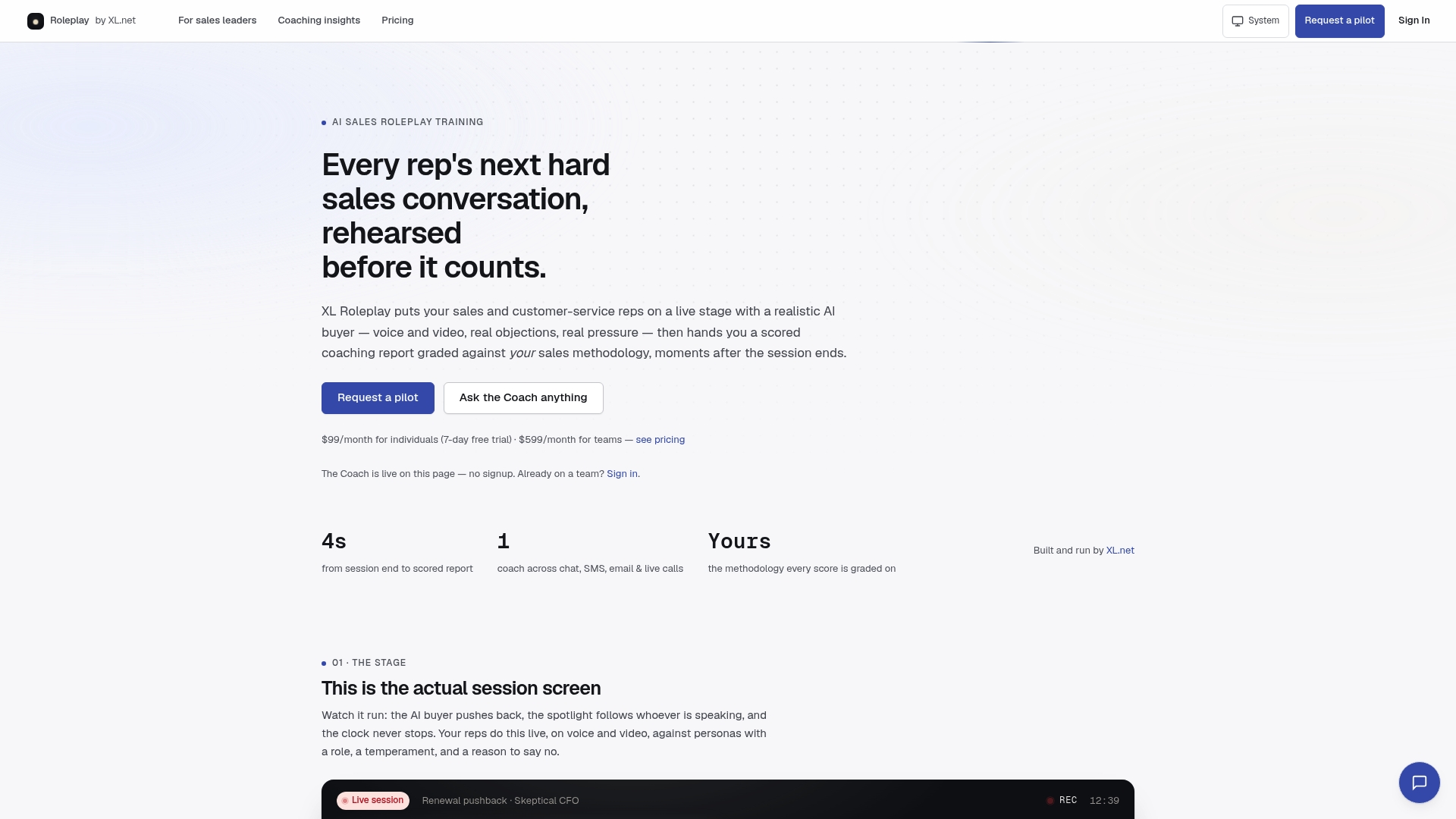
An XL Roleplay pilot typically scopes one or two scenarios tied to a real deal-stage failure, runs for a defined window, and measures readiness scores alongside whatever operational metric you care most about, ramp time, win rate, or discount discipline. If you’re evaluating the platform, ask to see a live scenario built from your own call recordings and a sample coaching report scored against your methodology, not a stock demo script.
Pricing runs $99 a month for an Individual plan and $599 a month for Business, with extra seats and video hours available beyond the base plan. Sales leaders can review the platform built specifically for their role on the page for sales leaders, or start by scoping a pilot directly.
Sources
- Simulation-Based Learning in Higher Education: A Meta-Analysis
- The Effectiveness of Simulation-Based Versus Patient-Based Clinical Education in Nursing: A Systematic Review and Meta-Analysis
- How effective is simulation-based learning in higher education?
FAQ
What Are Some Examples of Simulation-Based Training?
Common examples include AI-driven roleplay against a virtual buyer persona, actor-led negotiation exercises, VR-based scenario walkthroughs for field or retail roles, and blended programs that mix live and virtual sessions. Sales teams often start with objection-handling and discovery scenarios, then expand into negotiation roleplay focused on protecting margin.
What Is a Sales Simulation?
A sales simulation is a controlled practice conversation with a realistic buyer, human or AI, where a rep’s decisions produce visible consequences and get scored against a rubric. It differs from generic role-play because every session is recorded, repeatable, and reviewed against a defined methodology rather than a manager’s subjective impression.
What Is the Best Training Program for Sales?
There’s no single best program, since the right fit depends on whether the gap is behavioral or informational. For behavioral gaps, freezing on objections, weak discovery, caving on price, a program combining scenario-based simulation with structured, stage-specific debriefs shows the strongest evidence, backed by effect sizes as high as 0.85 in learning-science research. Platforms like XL Roleplay apply that model directly to sales conversations.
What Is Simulation-Based Training?
Simulation-based training is scenario-driven practice where a learner faces realistic decisions and consequences instead of passive instruction, with performance scored and reviewed afterward. It relies on three core mechanisms, feedback, repetition, and realistic stakes, to build skills that transfer to real situations faster than lecture-based methods.
How Long Should a Sales Simulation Pilot Run?
Most pilots need 8 to 12 weeks to show a measurable shift in readiness scores and at least an early signal in operational metrics like ramp time or win rate. Shorter pilots often produce learning-layer results without enough time for those gains to show up in actual deals.