Timeline Objections: Scripts and Two Drills for the “Not Now” Stall
Timeline Objections: Scripts and Two Drills for the “Not Now” Stall

A timeline objection is a deferral, a prospect telling you “not now” instead of “no.” The right move is never to accept it at face value: ask one focused diagnostic question before you agree to delay. Everything below walks through why these objections happen, how to diagnose them live, exact scripts to use, and drills to practice until the responses feel automatic.
TL;DR:
- Use urgency, decision process, and stakeholder readiness to distinguish a real delay from a stall; specific answers support a scheduled next step.
- Ask whether the delay reflects budget, approval, or another obstacle, then record any fiscal quarter or budget cycle and tie follow up to that date.
- Acknowledge the constraint, quantify waiting costs with the prospect’s figures, then suggest a small next step, such as a 15 minute call.
- For pauses of 30 to 90 days, check in with a relevant update; for delays of six months or longer, send occasional useful insights instead.
Table of Contents
- What timeline objections sound like and why prospects use them
- Signal decoding: separating real timing from a polite stall
- Discovery questions that surface the real reason behind “not now”
- Scripts that respond to a timeline objection without sounding pushy
- Following up without losing the opportunity to silence
- Practice drills that build timing-objection skill before the real call
- [What timing objections actually tell a sales leader](#what-timing-objections-actually-tell-a-sales-leaderhttpscornerstonesearchcomsales-training-vs-recruiting-what-drives-team-performance)
- Practicing timeline objections with XL Roleplay
- FAQ
- Sources
What timeline objections sound like and why prospects use them
Most timeline pushback arrives in a handful of familiar phrases, and each one hides a different motive.
- “Not the right time” often means the pain is not urgent yet, or the rep hasn’t connected the cost of inaction to a business outcome.
- “Let’s revisit in six months” can signal a real budget cycle, or it can be a polite way to end the conversation.
- “We’re waiting on budget approval” might be true, or it might mean the buyer never saw enough value to fight for budget.
- “We need to finish another project first” usually points to a competing priority, not a rejection of your solution.
A lot of this behavior traces back to preference formed earlier in the buying process. Forrester reports that a large share of B2B buyers already have a preferred vendor in mind before they start shopping, and that preferred vendor wins more than half the time. A timing objection often masks a preference decision that was made before you ever got on the call.
Signal decoding: separating real timing from a polite stall
Before you accept any delay, run a quick mental check across three dimensions. Each one has two questions you can ask live, without sounding like an interrogation.
- Urgency and pain. Ask “What happens if this problem goes unsolved for another two quarters?” and “Who inside the company feels this pain the most right now?” A vague or shrugging answer usually means the pain isn’t sharp enough yet to justify action, so you need to qualify deeper before pushing for a date.
- Decision process. Ask “Walk me through how a decision like this typically gets approved” and “Has budget already been allocated, or does it need to be requested?” A clear, specific process description usually signals a genuine timeline, which means your next move is to set a concrete follow-up tied to that process.
- Stakeholder readiness. Ask “Who else needs to be comfortable with this before you move forward?” and “Have they seen what we’ve discussed so far?” If the answer reveals missing stakeholders, your next step is to get in front of them, not to wait passively.
Clear, specific answers point to a real timeline you can plan around. Vague or evasive answers point to a stall that needs more discovery before you accept any delay.
Discovery questions that surface the real reason behind “not now”
The goal of discovery here is to get specific without putting the prospect on the defensive. Open-ended, curious phrasing works better than direct challenges.
- “What would need to be true for this to become a priority sooner?” surfaces the actual blocker instead of a vague excuse.
- “Is the delay about budget, approval, or something else on your end?” narrows the objection to a category you can address directly.
- “If budget weren’t a factor, would the timeline change?” separates financial constraints from genuine lack of interest.
- “Who typically signs off on a purchase like this, and what do they usually want to see?” maps the decision process and tells you who else to engage.
Use the answers to build a concrete picture: who needs to be involved, what criteria matter to them, and whether the stated timeline has any internal deadline attached to it. If a prospect mentions a budget cycle or a fiscal quarter, write it down and anchor your follow-up to that date rather than a generic “checking in” cadence.
Pro Tip: Phrase diagnostic questions as curiosity, not challenge: “Help me understand what changes in Q2” lands softer than “Why not now?” and gets a more honest answer.
Scripts that respond to a timeline objection without sounding pushy
A simple three-step micro-framework covers almost every timing objection: acknowledge the delay, quantify what waiting actually costs, then propose a low-effort next step that doesn’t require a full commitment.
- Acknowledge first. “That makes sense, a lot of teams time this around their budget cycle.” This removes the defensiveness before you ask anything else.
- Quantify the cost of waiting. Tie the delay to a number, a risk, or a comparison the prospect already cares about. “Every quarter this sits unsolved, you mentioned it’s costing the team about ten hours a week in manual work. That adds up fast over six months.”
- Propose something small. Ask for a short, specific next step instead of a full buying decision: a 15-minute call to review decision criteria, a calendar hold for when budget opens, or a small pilot that doesn’t require sign-off.
Here’s how that framework sounds against three common objections:
“We’ll revisit this later.” “Budget’s locked until next quarter.” “We’re just not ready yet.” This pattern mirrors what practitioners recommend on Gartner’s peer community: walk the opportunity back by restating the original pain, asking what changed, and probing the risk of waiting. That sequence reveals whether a “revisit in six months” is a real timeline or a polite exit.
Following up without losing the opportunity to silence
Once a prospect confirms a genuine delay, the follow-up cadence matters as much as the original objection handling. A short pause of 30 to 90 days calls for a check-in tied to something new: a relevant update, a small case example, or a direct question about whether internal priorities shifted. A longer pause of six months or more needs a lighter touch, maybe a quarterly note that shares one useful insight rather than a repeated “just checking in.”
- Watch for engagement signals: email opens, website visits, or a return to a proposal you sent.
- Watch for external signals: new job postings on the buying team, a competitor RFP surfacing, or leadership changes that reopen the conversation.
- When any of these signals appear, re-escalate immediately rather than waiting for the scheduled check-in.
- Keep the relationship warm with small, specific deliverables, a short benchmark, a relevant update, instead of generic “how’s it going” messages.
Practice drills that build timing-objection skill before the real call
Reading scripts is not the same as using them under pressure. Two drills make the difference.
- Walk-back triage drill. One partner plays the prospect delivering “let’s revisit in six months.” The rep must restate the original pain, ask what changed, and probe the risk of waiting, all in under 90 seconds. Score the rep on whether all three steps appeared and whether the tone stayed curious rather than defensive.
- Cost-of-wait quantification drill. The rep gets a vague business scenario and must produce a specific cost-of-waiting statement within 60 seconds, tied to a number or outcome the prospect would recognize. Score for specificity: a generic statement fails, a number-anchored one passes.
Running these live with a manager works, but iteration speeds up with structured reps and consistent scoring. Pair the drills with a library of roleplay scenarios built from real calls so the practice reflects objections your team actually hears.
Pro Tip: Run both drills weekly in short five-minute bursts rather than one long monthly session; frequency builds the instinct faster than duration does.
What timing objections actually tell a sales leader
A spike in timeline objections usually means the team’s qualification or messaging has a gap, not that prospects are uniquely busy this quarter. When reps hear “not now” repeatedly, it’s worth checking whether discovery questions surface real urgency early enough, and whether collateral builds preference before the buyer starts comparing vendors. Coaching after a tough call should include a quick walk-back review, a short roleplay of the moment that stalled, and, where needed, an update to the talk track or materials reps lean on. Marketing and sales share the job of shaping preference early, since preference formation tends to precede in-market intent, which means the real fix often starts before the sales call ever happens.
— Adam
Practicing timeline objections with XL Roleplay
Reading a script never feels the same as fielding “we’ll revisit this in six months” from a skeptical buyer who wants a real answer in real time. Our platform runs live voice and video sessions against AI buyers trained to throw exactly that kind of pushback, with coaching reports scored according to your organization’s methodology.
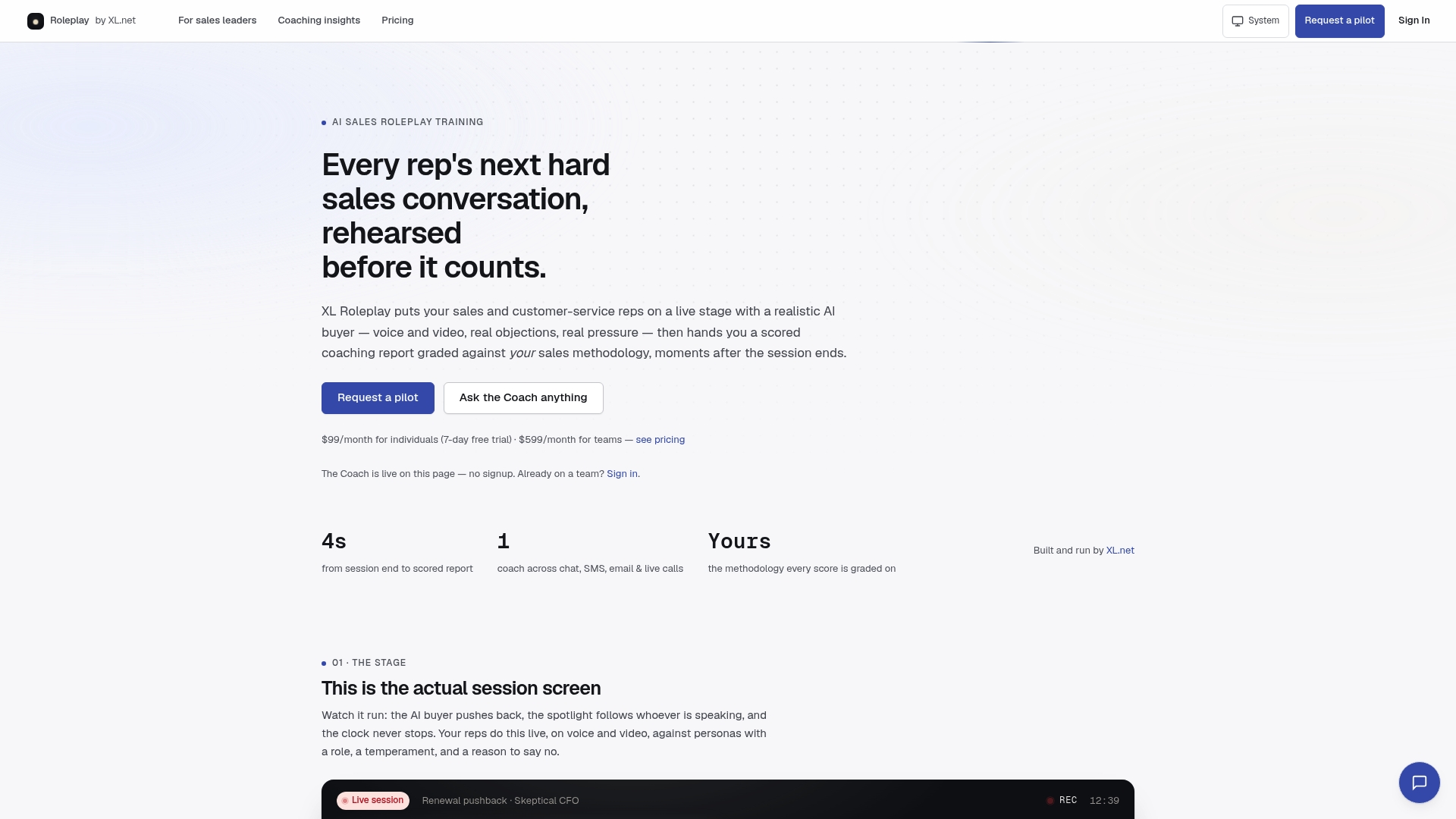
Both drills above, walk-back triage and cost-of-wait quantification, run directly in-platform, with transcripts and readiness scores managers can review without sitting in on every session. Reps get immediate feedback on whether they hit the diagnostic questions and quantified the cost of waiting, and managers get a record to track improvement over time.
Teams ready to test this against their own objection patterns can start with the XL Roleplay pilot or review plans and pricing for individual and team access.

FAQ
How should you deal with customer objections in general?
Treat an objection as a request for more information rather than a rejection: acknowledge it, ask a diagnostic question to find the real cause, then respond with a specific answer tied to that cause. This applies to timeline, budget, and authority objections alike, and it works better than a scripted rebuttal that ignores what the buyer actually said.
What are five common objections in sales?
The most frequent objections cover price, timing, authority (needing someone else’s approval), need (not seeing the problem clearly), and trust in the vendor or product. Timeline objections, phrases like “not the right time” or “let’s revisit later,” are among the most common because they’re the easiest way for a prospect to pause a conversation politely.
What are the three major objection categories?
Sales objections generally fall into three buckets: lack of need, lack of urgency (including timing objections), and lack of trust or budget. Diagnosing which bucket an objection falls into determines whether you should re-pitch value, quantify the cost of waiting, or address a credibility concern directly.
What is an example of a timeline objection?
“We’ll revisit this in six months” or “we’re waiting on next quarter’s budget” are both classic timeline objections. The right response is a walk-back question like “what would need to change for this to move sooner,” which practitioner guidance from Gartner’s peer community recommends to separate a genuine delay from a polite stall.
Sources
- B2B Buyer Vendor Preferences Are Durable Across All Purchase Types | Forrester
- Gartner Peer Community post: advice on responding to ‘let’s revisit this in 6 months’